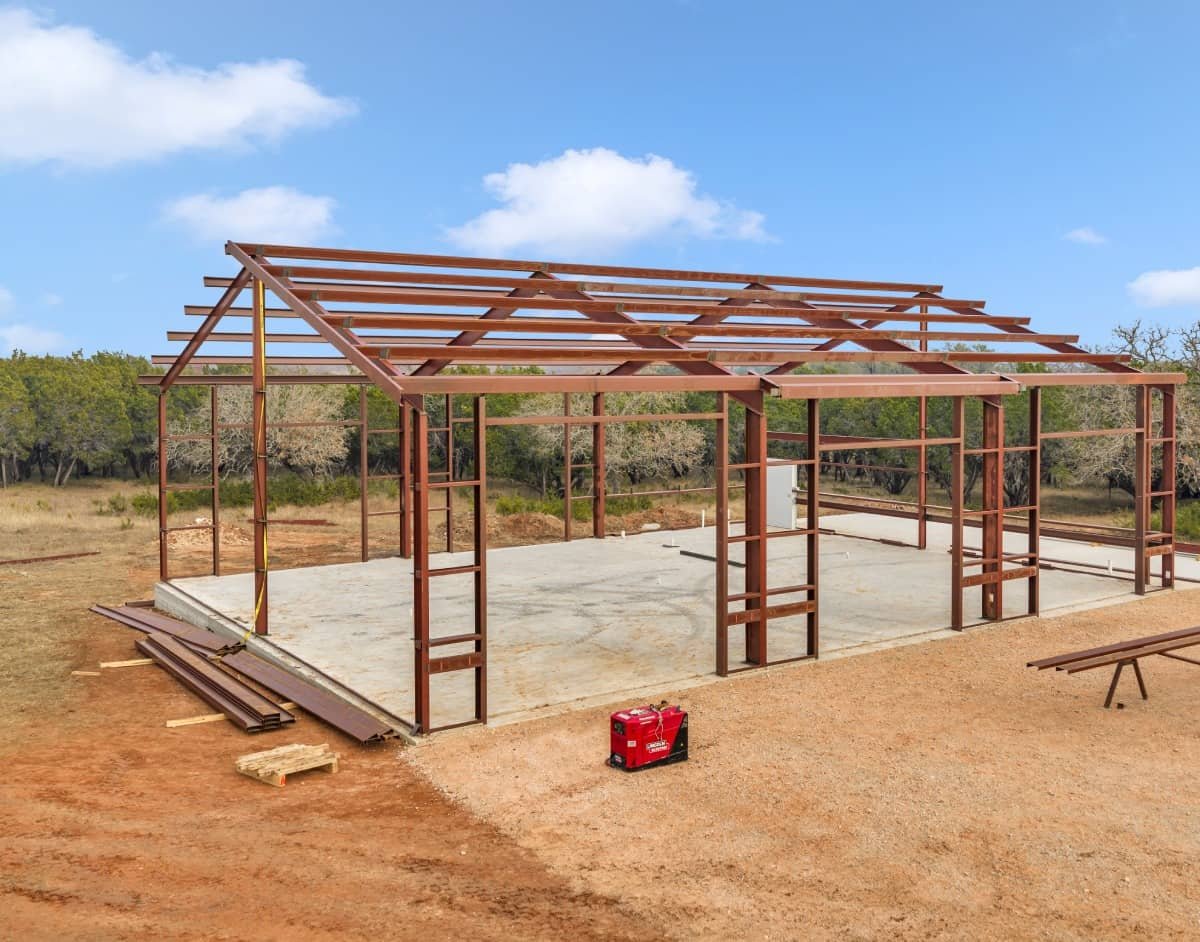
Metal Buildings in Galveston, Texas
A metal building on Galveston Island is designed for water first and wind second, and we plan every one that way. We erect pre-engineered steel shops, marine and port support buildings, warehouses and storage structures for owners who want a firm price and a short schedule on an island where land is limited, flood rules are strict and weather decides the calendar.
The National Weather Service Houston/Galveston office says Hurricane Ike made landfall on September 13, 2008, at the upper end of Category 2 intensity at the northern tip of Galveston Island, with storm surge on the island and the west side of Galveston Bay estimated between 10 and 15 feet. That number sets the tone for building here. We start with the flood zone and the required floor elevation, choose a foundation that survives water, and specify wall and roof systems rated for the design wind speed the building official requires. The frame and panels are the easy part once those decisions are made.
Port, cruise and medical economy
The island's economy gives steel-building owners plenty of reasons to build. A Port of Galveston release dated November 26, 2024 says almost 1.5 million passengers embarked on 354 cruises in 2023, that cruise operations supported 4,547 jobs for area residents, and that the port moved 3.6 million tons of cargo. Every cruise embarkation depends on provisioning, laundry, trucking, storage and maintenance businesses that need space close to the docks.
The Galveston Chamber of Commerce states that the island's university medical branch is the largest employer in Galveston and in the county, and names it and a state university campus on the island as institutions projecting growth in facilities and enrollment. Medical and academic growth brings its own support trades. We build for those suppliers and for owners in municipal and public works and recreation and sports use.
What gets built on the island
Typical projects include marine shops with tall doors, warehouses for provisioning and equipment, and government and municipal buildings such as maintenance shops and storage. Boat storage and dry-stack structures also appear, and so do covered pavilions and recreation buildings.
A Port of Galveston press release dated April 20, 2025 describes the $156 million Cruise Terminal 16, which converts two existing cargo buildings into a 160,000-square-foot cruise terminal with a seven-story precast concrete garage providing more than 1,600 spaces. Large public work like that uses concrete and conversions, not steel kits, but it shows the island reuses large warehouses. Steel shells are often the practical choice for smaller owners who need new space on tight parcels.
Elevation, salt air and tight parcels
Three conditions decide most Galveston designs. The first is flood elevation: the lowest floor must sit at or above the required level, which can mean fill, piers or a raised slab with ramps at the doors. The second is salt air: fasteners, trim and panel coatings need to resist corrosion, and we choose finishes and stainless or coated hardware with that in mind. The third is parcel size: many lots are narrow, and truck access is limited by street width and parking rules.
Corrosion also affects maintenance planning. A coastal steel roof benefits from a rinse and inspection every year, and we leave a one-page care sheet with each building: what to look at, how often, and which small repairs prevent big ones. Galvanized and coated components last a long time on the island when someone checks them.
We handle these by walking the lot early with a survey in hand, then drawing a building footprint that respects setbacks and flood zones before the steel package is ordered.
From survey to dry-in
Our scope on the island is usually foundation, structural frame, roof and wall panels, trim, doors and gutters. We coordinate with the engineer on pile or pier design when soils call for it and handle the anchor bolts and base plates to match. After erection, we deliver a weathertight shell and punch list.
Because the island is reached by one causeway and a few ferry and bridge routes, delivery planning matters. We schedule steel trucks around traffic and event days, and we plan crane arrival so equipment does not sit idle waiting on a bridge opening or a closed road.
Utilities are the other timing item. Island parcels can have older water, sewer and electrical service, and a new building may need an upgrade or a new tap. We ask the utilities for availability letters at the start so the building is not finished without power.
The island, the mainland and the coast
We build on Galveston Island and in the surrounding county, and we regularly look at sites on the mainland side for owners who want lower land cost and easier flood conditions. From there we reach Baytown to the north and Freeport to the southwest along the coast.
The Coastal Texas program, approved in the Water Resources Development Act of 2022 signed December 23, 2022, carries a $34 billion estimate, according to Waterways Journal. It includes gates across the Houston Ship Channel between Galveston and the Bolivar Peninsula, Galveston Seawall improvements and a ring barrier on the island's backside, and could take up to 20 years to build. Owners making long-term decisions should know the area's flood protection picture will change over time, and we recommend designing for current requirements without assuming future protection.
Wind, lightning and storm preparation
Island weather changes fast. We watch forecasts daily and stop lifts at the wind limit for the crane and the steel being handled. During hurricane season we plan for the possibility of a storm: partially erected frames get extra bracing, loose panels are strapped, and materials stay off the ground in low spots.
Every crew on site works with fall protection, controlled access and daily hazard talks. On crowded tourist streets, we also use barricades and flaggers so deliveries do not endanger pedestrians.
Plan a Galveston building
Send us the address and the use. We will check flood requirements, wind exposure and delivery access, then give you a priced scope.
Common Questions
How high does my floor have to be?
The building official sets the minimum based on the flood zone and the base flood elevation, plus any freeboard the city requires. An elevation certificate from a surveyor confirms where your lot stands. We design the foundation to meet it.
Will salt air corrode a steel building?
It can. Coastal projects need heavier coatings on panels, corrosion-resistant fasteners and careful flashing details. We recommend finishes suited to the marine environment and describe the maintenance schedule honestly.
Is a steel building a good choice for a storm-prone island?
When engineered for the required wind speed and installed correctly, yes. The frame, the cladding and the connections are all designed for the code wind load. We follow the engineer and the building official.
How do you handle limited parcels?
We build a tight footprint with a clear plan for deliveries, crane placement and storage during erection. Sometimes we stage materials off-site and bring them in as needed.
What if a hurricane threatens during construction?
We secure the site: add bracing, strap or remove loose panels and clear the lay-down area. We also adjust the schedule and inform you about any impact.