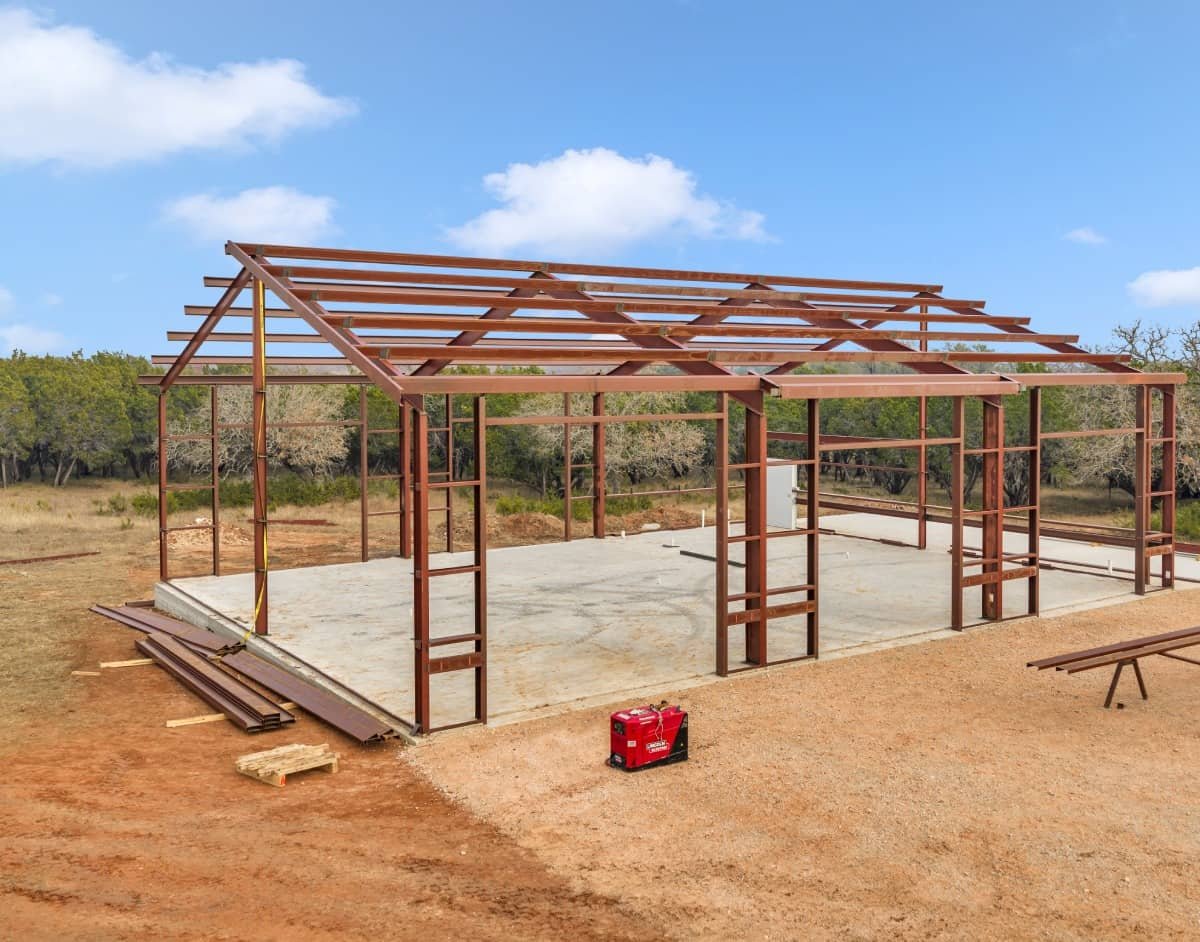
Metal Buildings in Freeport, Texas
Vehicle processors, chemical-plant vendors and harbor contractors in Freeport need buildings that sit on the flood-prone edge of the Gulf and still open on schedule, and that is the job we take on. Our pre-engineered steel shops, warehouses and storage buildings are designed for the required wind speed, raised to the required floor elevation and priced per square foot before any steel is ordered.
The industrial base here is enormous. The operator of the largest integrated chemical site in its portfolio describes the 7,000-acre Freeport location as manufacturing 44 percent of the products it sells in the United States and over 21 percent of those sold worldwide. A site of that scale needs welders, scaffold crews, instrument technicians, pipe suppliers and equipment repair shops by the hundred, and they need to be close. That is where small and mid-size steel buildings earn their keep.
Storm surge and low ground
The National Weather Service Houston/Galveston office states that during Hurricane Ike on September 13, 2008, a storm surge of 5 to 10 feet was recorded in Brazoria County, including near Freeport. Anyone building here has to design for water. We confirm the flood zone, get an elevation certificate and set the finished floor accordingly, then choose a foundation that tolerates wet soil and a drainage plan that moves water away from the building.
Dreading the next storm is not a plan, but preparing for it is. We use corrosion-resistant fasteners and coatings, keep electrical panels and equipment high, and detail door thresholds so water does not wick in. Owners often tell us the extra cost is small compared with the first cleanup it prevents.
Inside the building, we raise outlets and switchgear where the design allows and run conduit overhead instead of in the slab. A shop that floods and dries out in a day is a lot better than one that must replace every wire. We also leave a small number of weep and drain details at the door line so water has a way out, as well as a way in.
Vehicle yards, shops and storage
A Texas Comptroller port profile (2016 data) says an automobile terminal opened at Port Freeport in 2015 with an initial 100-acre build-out and capacity for 150,000 vehicles per year. Facilities like that rely on inspection bays, detail shops, repair buildings and storage for parts and accessories. These are commonly warehouses or truck terminal style buildings with tall doors and open floors.
The same profile reports that the Freeport Harbor channel is 400 feet wide and 45 feet deep, is approved for deepening to 55 feet and widening to 600 feet, and that the port has access to a Union Pacific rail line and 18 docks, 7 of them public. Since this is older data, we advise owners to check current port facilities, but it indicates the mix of water, rail and truck traffic that supports varied building types.
Brazoria County and the surrounding coast
We build in Freeport and across Brazoria County, including the areas toward Pearland on the north end, and down the coast to Galveston. Industrial tenants often choose their site by drive time to the gate and by the flood status of the road, not just the lot. We help owners check both.
Dredging Today reported in January 2023 on the $703-million Freeport Project, improvements to the existing Hurricane Flood Protection Project and one of three projects in the Sabine Pass to Galveston Bay Program, intended to reduce coastal storm surge flood risk without increasing flooding from local rainfall. Such work will shape the area's flood maps over time. In the meantime, we build to current requirements and plan for flexibility. That means a standard footprint, adaptable utility locations and a floor height that leaves room to adjust. Trucks arrive through Freeport from highways that can be slow after a storm, so we also give owners a realistic read on delivery time in the weeks after a weather event.
Plant-adjacent work
Energy facilities here carry a documented history that shapes site rules. A Federal Register notice published July 1, 2025 states that the June 8, 2022 explosion took the Brazoria County terminal offline and that the operator asked the Federal Energy Regulatory Commission for a 40-month extension to complete its Train 4 Project, moving the construction deadline to December 1, 2031. Because of that history, sites near such facilities may carry extra rules for hot work, access and staging.
We ask each owner for site rules before mobilizing, brief crews on them and keep records. Our own practices include fall protection, exclusion zones under loads and daily wind checks.
Permits, wind and flood paperwork
Freeport's building permits depend on wind speed, exposure and flood zone. Requirements are set locally, so we confirm them with the building department. The metal building engineer designs the frame and cladding for the wind requirement, and the foundation engineer designs for the soils and flood elevation. Both go in the permit set.
The permit calendar often controls the start date more than the crew does, so we send complete packages and answer reviewer comments the same day. Coastal projects sometimes need additional reviews, such as drainage or floodplain approval. We build those into the schedule at the start and keep a checklist so nothing is missed.
Who builds with us
Our Freeport customers are mostly in manufacturing and its service trades, with some in automotive and fleet operations. They need practical buildings: wide doors, heavy slabs, good lighting and security. We design for those uses and keep finishes simple so the money goes where it matters. A vehicle-processing or fleet shop may also want oversize overhead doors and a high-bay interior for lifts, and we raise those items at the first meeting because they change the frame.
If you operate a small business with a few trucks and a yard, we can propose a modest building with room to grow. If you run a larger operation, we can propose multiple bays that share a common wall and utilities.
Price a Freeport building
Send us the lot, the use and your flood certificate if you have one. We will return a priced scope with the floor height and steel lead time spelled out.
Common Questions
How much higher should the floor be than the flood minimum?
Many owners add a foot or more above the minimum if the budget allows. The extra height reduces risk and sometimes insurance cost. We price a few options so you can compare.
Which materials hold up best in salt air?
Coated panels, stainless or coated fasteners and careful flashing details perform best. We recommend them for coastal sites and explain the maintenance schedule.
Can you build near active plant property?
Often yes, if the owner shares access rules. We plan the work around those rules and keep records for your site manager.
Will the flood protection project change my flood zone?
It might over time, but permits follow current maps. We design to current requirements and recommend flexibility where possible.
What size building do vendors choose?
Many choose 5,000 to 25,000 square feet with a few overhead doors. We start with your equipment list and work from there.