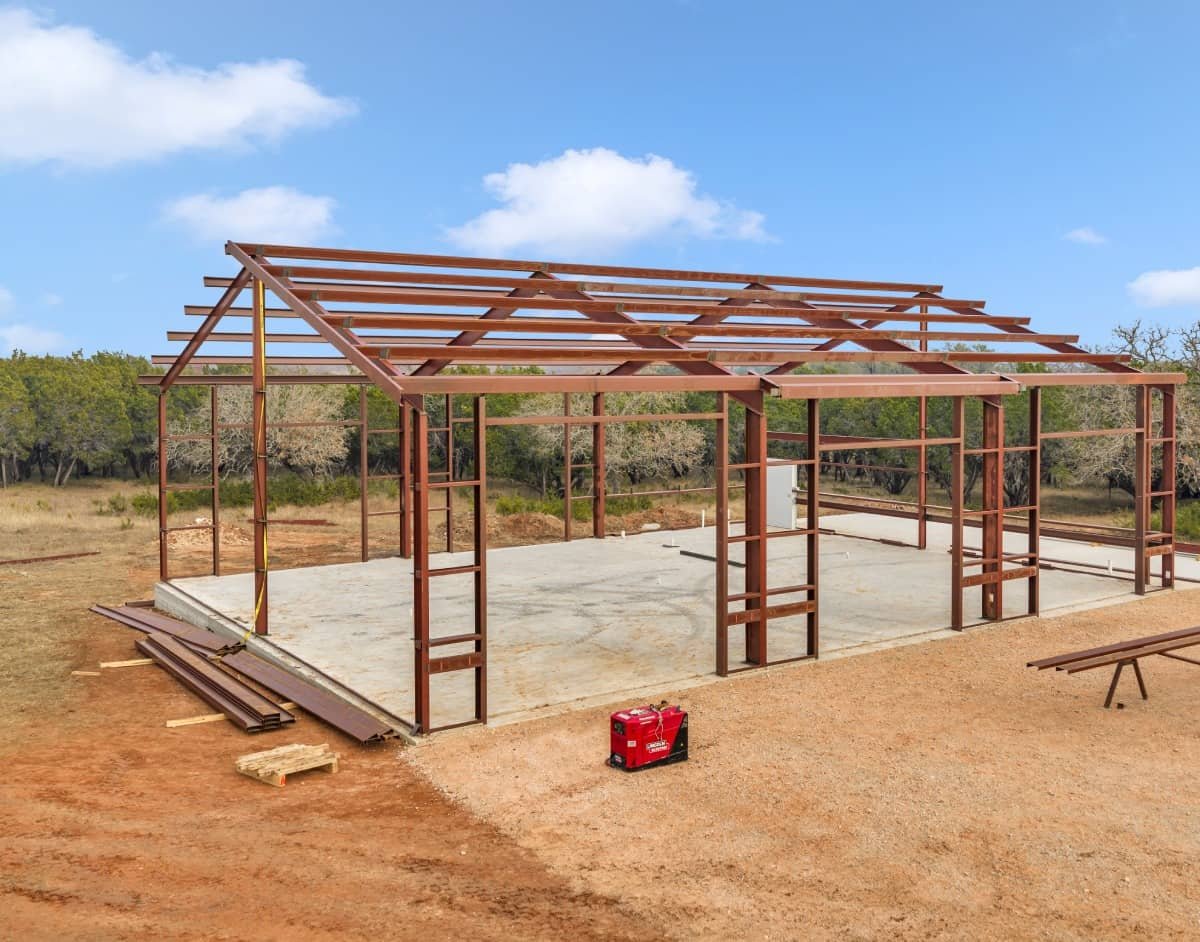
Metal Buildings for Municipal Public Works in Texas
Public works buildings rarely make the ribbon-cutting photos. A street department shop, a pump station housing, a salt and sand shed, a water plant chemical room, a records warehouse or a fleet garage does its job when nobody thinks about it, and the people who sign off on it answer to a council, a commissioners court, a utility board or a district. They need a price that survives a public bid, a schedule that matches a funding cycle and a building that will last through heavy use year after year without a rebuild.
We build for cities, counties, special districts, municipal utilities, school transportation departments, port authorities and the contractors who serve them. A pre-engineered metal building is often the lowest-cost way to put a roof over equipment, materials and crews, and it can be designed for the corrosive and heavy-duty conditions that public works faces. The rest of the job is paperwork and discipline: procurement, bonding, accessibility review, inspections and clear communication with the owner's representative.
This page walks through how public owners fund, buy and manage such buildings in Texas, and how we fit into that process without making the owner's staff do our work.
What public works buildings need to survive
The environment sets the design. A salt or sand shed needs a structure that resists corrosion and takes heavy lateral pressure from stockpiles on the walls. A pump or lift station building may need an extra-wide door for equipment removal, a hoist beam and a floor that handles washdown. A fleet garage wants tall doors, drains and ventilation. A records or supply warehouse looks like any other warehouse but has to stay dry and secure for decades.
We discuss finish and detail choices at the start: heavier gauge panels, galvanized or coated framing, sealed penetrations, and concrete walls at the base where stockpiles push on the wall. Texas weather rewards that care. The state led the nation with 878 hail events and 169 tornadoes in 2024, and a public building is not allowed to fail in the storm it exists to help the city respond to. When the owner's fleet or equipment is large, see how automotive and fleet owners lay out bays and lifts.
Where the money is coming from
Public funding in Texas is moving toward water and flood work. Voters approved Proposition 4 on November 4, 2025, which directs up to $1 billion a year from existing state sales tax revenue, beginning in 2027, toward water supply and related programs including flood mitigation, about $20 billion over two decades. Transfers happen only in years when sales tax collections exceed $46.5 billion, so cities should plan for variability. The Texas Water Development Board also approved 15 regional flood plans in March 2024 as part of the state's first flood plan.
Utilities and roads add their own needs. Garland Power and Light serves more than 69,000 customers and is described as the fourth-largest municipal utility in the state, and Denton's municipal electric system has operated for well over a century according to one source. In oil-producing De Witt County, county officials reported maintaining 690 miles of roads, appropriating $23 million a year and spending at least $220 million on rebuilding and upkeep. Those numbers translate to equipment, materials and crews that need protected space.
How we work with a public owner
We start by learning how the owner buys. Some entities use competitive sealed bids, some use cooperative purchasing contracts, some use design-build or construction manager at risk procedures, and some take small projects through quotation limits. We tell you which route we can respond to and prepare an accurate price for it. Where the owner needs a design before bidding, we can provide a concept and cost estimate for budgeting and a package of drawings that an engineer can adopt.
Then we build the file the public record will need. That includes bonds where required, insurance certificates, submittals, schedule of values and pay applications, and certified payroll if it applies. We keep the owner's project manager informed with simple weekly updates and photos. Our design-build service puts foundation, frame and finish under one contract, which reduces the chance of finger-pointing, and the page on government and municipal buildings covers the typical building list.
Budgets, change orders and life-cycle cost
Public owners should compare the cost to own, not just the bid price. A thicker panel, a better coating or a concealed-fastener roof may cost a few percent more up front and save repair visits for years. Insulation and efficient lighting lower the electric bill, and a good drainage plan keeps the slab dry. We give alternates in the bid, such as upgraded roofing or additional bays, so the council can pick based on money available.
Change orders are where public budgets suffer. Most come from unknown site conditions, late equipment selections or scope that was unclear. We reduce them by walking the site before bidding, asking for a soil report, listing assumptions, and getting equipment submittals early. Unit prices for rock excavation or unsuitable soil can protect both sides. For older sheds and warehouses, re-skinning and retrofit often costs a fraction of replacement, and the city can reuse sound steel.
Accessibility, codes and inspections
Public buildings must meet the rules private ones do and often more. Under state law the municipal commercial baseline is the International Building Code, but cities amend it by ordinance, and counties may have little or no code. Local and state agencies fund projects that require stricter standards. For state-funded buildings, the State Energy Conservation Office lists the ASHRAE 90.1 or IECC energy standard it adopts.
The Texas Department of Licensing and Regulation reviews accessibility for projects of $50,000 or more, using the Texas Accessibility Standards, and the plan review must come before inspection. We build that review into the schedule and name a responsible person on our team. Where the owner is sharing a campus with parks, courts or an airport, our guides to recreation buildings and aviation facilities describe the extra items inspectors may check. County offices outside a city should still receive engineered drawings.
Planning a public works building?
Share the equipment, the site and the funding source. We will respond to your procurement method with a price, alternates and a schedule that matches your approval dates.
Common Questions
How do you bid public work?
We respond to the owner's published procedure, whether that is sealed bids, a request for qualifications, a cooperative contract or a small purchase. We price the base building and list alternates so the board can choose.
Do we need bid and performance bonds?
Most public bids over set thresholds require them. We arrange bonds through a surety and include the premium in the price, shown as its own line.
Can a metal building be used for a water or wastewater facility?
Yes, for housing pumps, controls and storage. The process equipment inside is designed by an engineer, and we coordinate openings, hoists, floors and corrosion-resistant finishes.
How do we handle a building paid for with grant money?
Grants come with conditions on procurement, reporting and sometimes domestic content or wage rules. Tell us at the start, and we will track those requirements in the schedule and documents.
What if our budget changes after a bid?
We can provide alternates and phasing. An owner can award a base building and add bays, doors or finishes later when funding arrives. Plan the phases before the frame is designed.