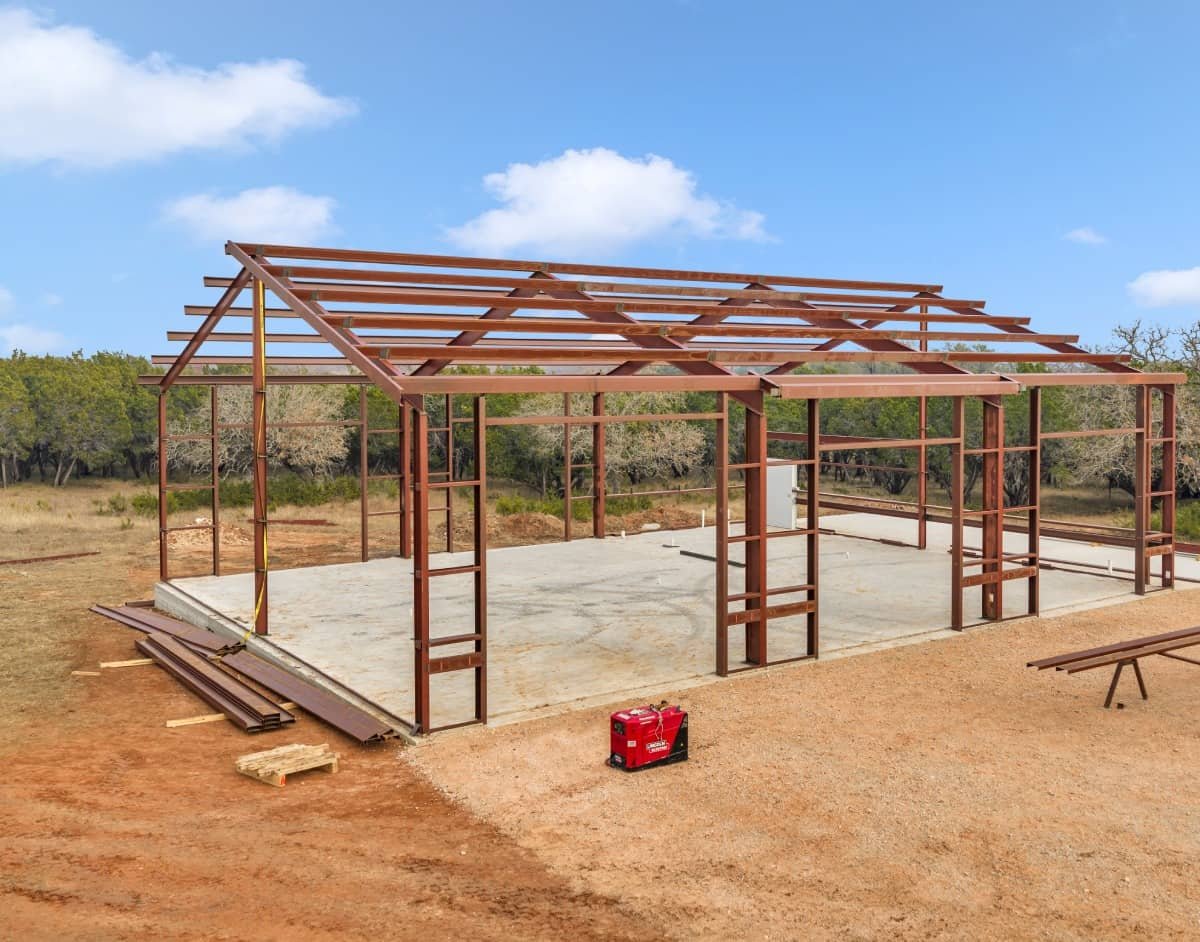
Standing Seam Metal Roofing in Texas
Hail does not care what your roof brochure says. When a nearly stationary storm sat over San Angelo in May 2020 and dropped stones from 1.75 to 3 inches across for about 90 minutes, it damaged roofs and vehicles across much of the city and the nearby air base. A roof that stays tight after that kind of beating, with seams that have not opened and panels that are dented but not punctured, is worth more than one that is merely cheaper on day one.
Standing seam is the roof most Texas owners eventually settle on for that reason. The panels run from eave to ridge with raised seams joined at the edges, and they are held down by concealed clips instead of screws through the face. No fasteners on the flat means no exposed holes to leak when the metal moves in the heat. The clips let the panel float, so a roof that swells and shrinks through a 100-degree afternoon does not work its fasteners loose.
We install standing seam on new metal buildings and over existing roofs. The roof is the most exposed part of the structure and the one that, when it goes wrong, takes the contents with it, so we treat the details with respect.
What a standing seam roof system includes
The system is more than panels. Underneath is the structural deck or purlin line, then an underlayment or slip sheet where the design calls for one, then the clips, the panels, and a long list of trim: eave, ridge, rake, valley, curb and penetration flashings. Each one is formed to the panel profile and sealed to match.
Panels are often roll-formed on site from coil, which lets us make a single piece run from eave to ridge without a lap in the field. Seams are closed either by snapping together or by a mechanical seamer that rolls them tight, and the choice depends on the slope and the weather exposure. Insulation, vapor control and ventilation are coordinated with the building, and with our insulated metal panel walls where the project uses them.
Texas weather is the reason
The state's hail record is hard to argue with. Texas led the nation with 878 hail events and 169 tornadoes in 2024, and insured losses in the state exceeded $47.2 billion, according to the Insurance Council of Texas market report cited by an insurance industry magazine. Not all of that is roofing, but a lot of it started on one.
Heat is the quieter test. Wichita Falls went through a drought from 2010 to 2013 and recorded 100 days at or above 100 degrees in 2011, by one account. A roof that sits in that heat expands and contracts every day, and a floating clip system lets it do so without stress. Owners in San Angelo and Wichita Falls have seen both the hail and the heat, and they tend to ask for standing seam by name.
Ratings, gauge and what the insurer wants
The roof has to meet the wind uplift requirements the code assigns to your site, and the panel and clip system carries a tested rating. Ask for it in writing. Gauge matters too: a heavier steel panel resists denting and punching better, and the difference in price is modest compared with the roof's total cost. Some insurers also give credit for roofs with a tested impact rating, so call yours before you choose.
On the permit side, a roof replaced on an existing commercial building usually needs a permit, and a re-roof over an existing roof may trigger structural and energy review. Cities set their own code editions in Texas on top of a state floor, so we check with the building department before we quote. Our re-skin and retrofit work covers the structural check for putting standing seam over an old roof.
Install details that keep it tight
Most roof leaks start at details, not at the field of the roof. So we spend time at the transitions: the clips set straight and at the right spacing, the panel ends hemmed, the curbs and penetrations flashed with room for movement. We keep the panels clean during installation and leave no metal shavings on the roof, because shavings rust and stain the finish.
Walking a standing seam roof takes care. We teach every installer where to step, where not to, and how to protect the finish. Panel runs are laid out from the center so the end result looks straight and the seams are evenly spaced. If you are building a wide structure, our commercial metal buildings service pairs the roof with the right frame and purlin spacing.
Working on a slick, high roof
Metal roofing is slippery, especially with morning dew or a light rain, and the roof edge is a long way up. Every crew uses fall protection systems matched to the job, such as guardrails, restraint lines or personal arrest gear where required. We also stage panels on the roof only where the framing can handle the load, and we tie them down so wind cannot lift them.
Wind is the daily judgment call. A full-length panel is a large, flexible sheet, and a gust can catch it. We set wind limits by panel length and lift method, and we stop when they are exceeded. Tools, trim scraps and fasteners are collected so nothing falls onto the people below.
Roofs that go with other work
Roofing is often one piece of a larger scope. A farm building might pair it with agricultural building framing, and a public facility may call for a roof that fits a sports or education program. We see standing seam on gyms and arenas in the recreation and sports facilities sector as well as on schools, where the long service life suits a public budget.
If your roof is failing and the building is otherwise sound, a retrofit can be much cheaper than a new building. Send us photos and a rough plan and we will tell you what we see.
Get a roof price
Send photos or plans, the roof size and slope, and any insurer requirements. We will return a clear price for standing seam and show how it compares with exposed-fastener panels.
Common Questions
Is standing seam worth the extra cost over exposed-fastener panels?
In hail and heat country it usually is. Exposed fasteners back out and their washers crack, so maintenance never ends. Standing seam costs more at the start and then largely leaves you alone. We price both so you can see the gap.
Will standing seam stop hail damage?
No roof is hailproof. A heavier gauge and tested impact rating reduce the chance of punctures, and the concealed clip design avoids leaks if panels dent. Cosmetic denting can still occur, and some insurers treat it differently from a leak, so ask yours.
Can you install standing seam over an old roof?
In many cases, yes. We check the existing structure, add a framing or sub-purlin system if needed, and fasten new clips through to solid support. That saves tear-off cost and keeps the building dry during the work.
How long does a roof take to install?
A mid-size roof can take a few weeks, depending on size, complexity and weather. Panel lead time is separate and comes first, so we schedule roll-forming or delivery after the building is ready.