Shop and Small Industrial Metal Buildings in Coppell, Texas
Shop owners in Coppell compete for the same land that large distribution developers want, so the building has to earn its footprint. A good small industrial building is 5,000 to 30,000 square feet of clear span, a few overhead doors, a small office and a paved apron, priced per square foot and delivered on a date you can plan around. That is what we build, and we keep the scope plain so you can compare it line by line with any other quote.
The big buildings nearby set the tone. Lovett Industrial started work in December 2024 on a two-building logistics park of 339,280 square feet, spread across 27 acres that straddle Coppell and Lewisville, with finish expected in the third quarter of 2025. Tenants in a park like that need electricians, HVAC contractors, pallet and packaging suppliers and repair shops close by. Those trades are the buyers who want a steel building of their own.
A smaller owner cannot match a developer's land position, but can win on speed. A steel frame, panels and slab can be finished in a fraction of the time a conventional building takes, and the price is easier to fix early.
One party in charge, trades on a schedule
We run each Coppell job the same way. First we confirm the lot, the use and the zoning. Then we set a building size, check it against the setbacks and parking count, and issue a concept with a price per square foot. After approval we order steel, and while it is being fabricated the concrete trade partner builds the foundation to the bolt layout we give them.
We schedule, coordinate, supervise and inspect those partners: the concrete crew, the erector, the panel installer, the electrician. You deal with us, and we deal with them. When something slips, we know about it the same day, and the written schedule moves with it.
Truck courts, utilities and neighbors
Small industrial lots in Coppell tend to be tight, so truck turning paths decide where the building can sit. We lay out the apron before we fix the building length, because a shop that trucks cannot reach is worth less. Utilities come next. Ask about water, sewer and electrical capacity at the street before you buy, since extending service can cost more than a bay of the building.
Stormwater is the other early question. Paved yards shed water quickly and the city will want to see where it goes. A detention area takes land that could have been building, so we often suggest a slightly taller, narrower building to keep the footprint small.
Highways, tollways and the airport next door
No freeway cuts through Coppell, but drivers reach it by SH 121 and the Sam Rayburn Tollway on two sides and by I-635 to the south. The northeast corner of DFW Airport also touches the city, and part of the airport grounds lies within Coppell. For a contractor or a warehousing and distribution operator, that means a short drive to almost anywhere in the metro and a lot of nearby truck traffic.
Alliance Industrial began work in March 2025 on a 186,291 square foot distribution center on 13 acres with 233 trailer stalls, about a mile from SH 121. The developer chose a 32-foot clear height. A small owner does not need that much, but it shows what the neighborhood expects, and our 18 to 24 foot options are a good fit for parts, tools and service work.
Coppell and the neighboring cities
Owners often look at Lewisville and Irving before settling, and some choose Plano when the customer base is north. The same building can be priced on each lot, with different land, utility and permit costs. We are happy to run those comparisons before you sign anything.
Because the area is so close to major roads, delivery of steel and panels is straightforward. We confirm gate and street access with the trucking company, and we plan crane placement so the neighbors are not blocked.
Shops, flex space and warehouses
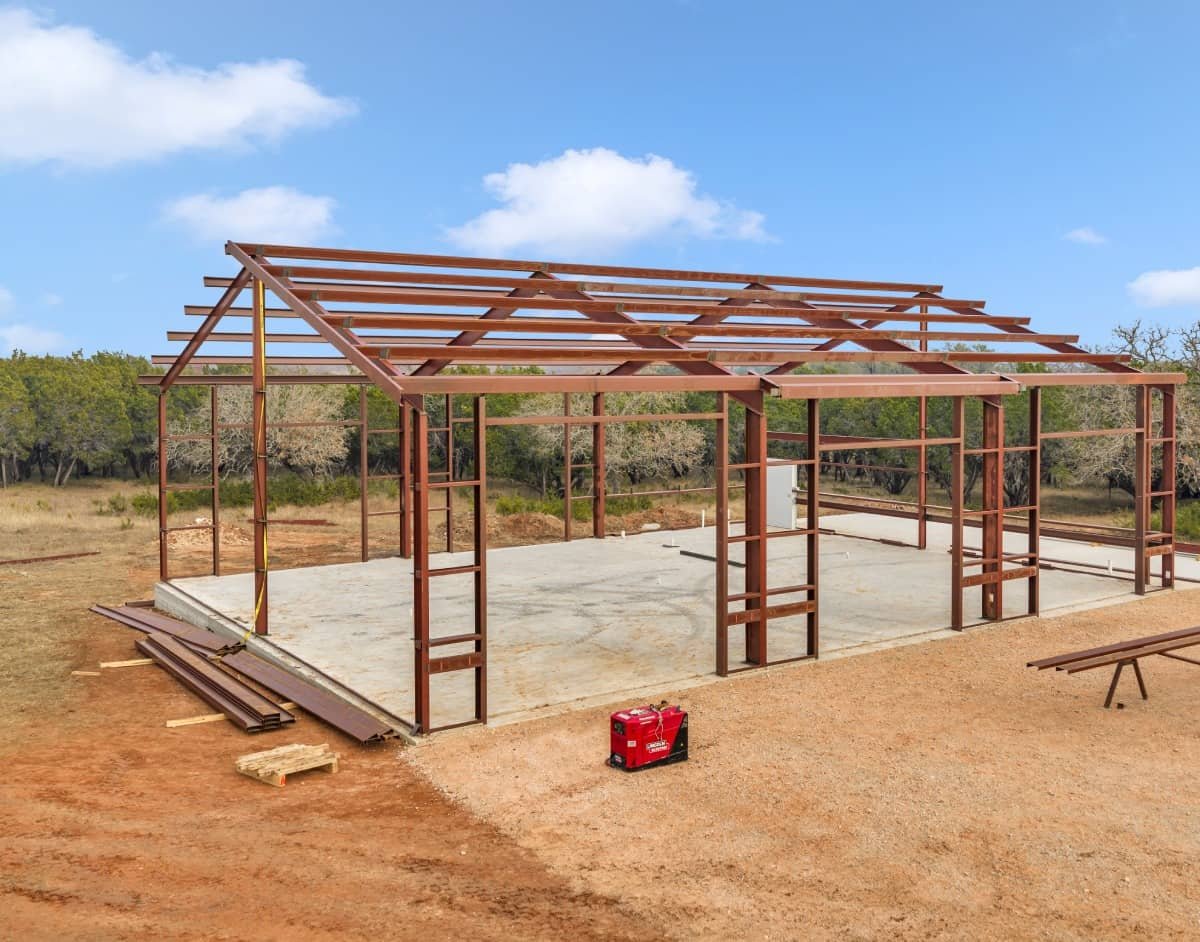
The common requests are a service shop with an office, a flex building for light assembly, and a small warehouse. We build all three from a pre-engineered metal building system, and we adjust bay spacing, eave height and door sizes to your use. Many buyers choose flex light industrial layouts so the building can be leased to another tenant later.
A clear-span frame has no interior columns, which means forklifts and shop equipment can be moved around without limits. That flexibility often counts for more at resale than the finish level does.
What changes the price
Foundation, wind package and site work vary the most. An office with HVAC, restrooms and a ceiling can cost as much per square foot as the shell it sits in, so we price it separately. Insulation, liner panels and overhead doors are the next biggest items, and each comes in a good, better and best level.
Steel prices move, and we say so in the quote. We hold a price for a stated period, then reprice if the order is delayed. You will always see the base building, the options and the site work as three groups, so a change in one is easy to follow.
What we deliver on a shop job
Scope runs from survey and permit drawings through the final inspection. It covers the slab, the frame, wall and roof panels, trim, doors, and the punch list. Rigid frame erection and insulated metal panels are common picks. Buyers with a workshop plan often add an industrial office buildout in the same contract.
Church and community groups sometimes call us about a parish hall or a recreation room, and we can build that as well, using the same frame with a different interior package.
Price a Coppell shop building
Tell us the lot, the use and the size you want. We will return a building concept, a price per square foot and a delivery window, and we will show the office, insulation and doors as separate lines.
Common Questions
What size shop is a sensible starting point?
Many owners start around 5,000 to 10,000 square feet and add later. We frame one end wall so an addition ties in cleanly. Starting smaller keeps the first cost down, and the lot is still there when you grow.
How soon can a small building be finished?
Once drawings are approved, steel fabrication and delivery take several weeks, and the foundation can be built at the same time. We give a written window and update it if the supplier changes the date.
Do I need a sprinkler system?
It depends on the use, the building area and what you store. The fire marshal decides, and we ask early so the cost is in the first price rather than added at the end.
Can the building be insulated for an office or shop?
Yes. Options include blanket insulation under the roof and walls, liner panels, and insulated metal panels for a stronger and cleaner wall. We price each so you can see the gain per dollar.
Can you also build a community or church hall?
Yes, the same frame works for a fellowship hall or recreation room. The interior, restrooms and parking differ, and we plan those at the start.