Steel Lead Times and Erection Scheduling in Paris, Texas
Plant managers and landowners in Paris ask the same question before they sign: when will the building be done? We erect pre-engineered steel for manufacturers, suppliers, contractors and farm and ranch owners, and the answer starts with a written steel lead time and a sequence of work that shows who does what and when.
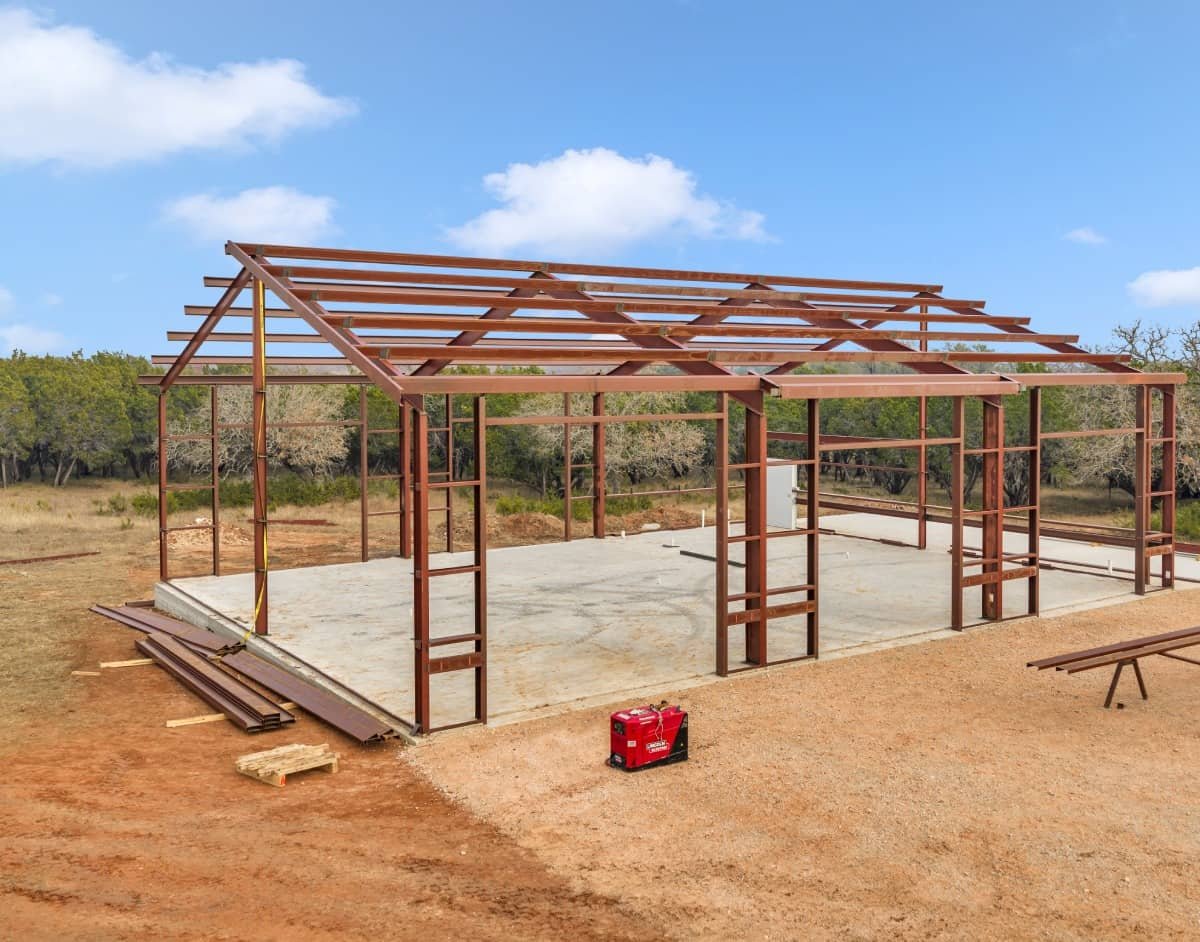
Steel is the long pole in any schedule. After drawings are approved, the manufacturer fabricates the frame, and that takes weeks, not days. Foundations, utilities and permits run during that time, and the frame is erected the moment it arrives and the slab is ready.
Our job is to manage that sequence. We schedule, coordinate, supervise and inspect the trade partners for concrete, erection, panels and electrical, and we tell you early when a date threatens to slip.
How we sequence a steel building
We break the job into steps with clear start and finish conditions: engineering and approval, steel order, site work, foundation, erection, panels and doors, finishes and closeout. A step does not start until the one before it has passed inspection, which prevents the costly rework that causes most delays.
We keep a master schedule and share it with you. It lists order dates, ship dates, delivery dates and inspection dates, and it is updated at regular intervals. If the fabricator's queue changes or rain delays a pour, you see the effect on the finish date the same day. We also confirm each trade partner's start date a week ahead, and we verify that materials, permits and access are in place, because a crew that arrives to find a locked gate or a missing bolt costs a day for everyone.
Items that stretch or shorten the calendar
Some options add time. Large overhead doors, insulated metal panels, a mezzanine or a crane runway each bring their own lead times and inspection steps. Others, such as standard doors and simple trim, move faster. Wall and roof panel colors can matter too, since stock colors ship sooner than special orders.
We flag these at the start and give you alternatives when time is tight. A pre-engineered metal building with a standard door package may arrive weeks sooner than a custom design.
Employers and owners we build for
Paris has a deep industrial base. Local lists show Essent-PRMC with 1,000 employees, Campbell Soup with 900, Kimberly-Clark with 800 and Turner Industries with 700 among the largest employers, and the Paris Economic Development Corporation reports a manufacturing location quotient of 2.97 in Lamar County, nearly three times the national average. Manufacturing owners here want production, storage and maintenance buildings that go up on a firm schedule.
The same development corporation holds more than 500 acres in the city for primary employers, including the Gene Stallings Business Park and shovel-ready land near Cox Field Airport. Farm and ranch owners in the surrounding county have a different set of needs, covered under agriculture and agribusiness, such as equipment barns, hay storage, feed buildings and shops. We plan their jobs around planting, calving and harvest, so that the building is ready when the season starts. For a plant, the planning is different: a production line may need to start on a set date, so we line up the building schedule with equipment deliveries and utility connections so that machines can be set the week the floor is released.
Permits, wind and tornado exposure
Paris lies in Tornado Alley. An F4 tornado on April 2, 1982 destroyed more than 1,500 homes and killed 10 people. A metal building is not tornado proof, but its design wind speed, roof uplift, wall pressure and anchor bolt layout come from the engineer and the jurisdiction, and we follow them closely. Foundation details such as bolt size and embedment get a second look before concrete is poured. Tornado exposure also affects choices like door ratings, where a wide overhead door is the weakest point in the wall, and we discuss reinforcement and wind-rated hardware for it.
We coordinate the stamped drawings, the permit submittal and inspections. Review time depends on the department and project type, so we ask for the current range and plan one round of comments. For a building that holds people or hazardous materials, we also confirm fire, accessibility and storm shelter questions with the building official.
Roads, rail and air access
Delivery planning is simpler when the roads are good. Paris is served by US 82, US 271, State Highway 19/24 and State Highway Loop 286, and the railroad line to Sherman is operated by the Dallas, Garland and Northeastern, with freight service only as of 2024. Cox Field, about seven miles east of the city and owned by the City of Paris, has a 6,002-foot asphalt runway and two 4,624-foot concrete runways.
Those connections matter for site selection and for steel deliveries. Long frame members arrive on flatbeds that need turning room and firm ground, so we check gates, culverts and overhead lines before the truck leaves. Where land is wet, we plan a gravel laydown area so deliveries do not wait on the weather. Hangar-style buildings near the field are a possibility too, and we can quote them on request.
Working in Paris and the surrounding counties
We take jobs in town, on industrial land and on rural parcels. Each has its own utility, drainage and access conditions, and we visit the site before quoting, noting trees, ditches, overhead lines, soft ground and the route a loaded truck will take. Delivery distance adds time and cost, and we include it in the schedule.
We also work in the nearby markets of Denison, Sherman and McKinney, which helps us book trade partners and trucks efficiently.
Schedule a Paris steel building
Send us the site, the building size and the date you need it. We will return a building price, a site estimate and a written steel lead time.
Common Questions
How long does steel take to arrive?
It depends on the fabricator's queue and the size of the building. We state the lead time in weeks in writing when you approve the drawings and report any change right away. Site work and the slab go ahead during that time.
What can I do to speed up the schedule?
Approve drawings quickly, choose standard doors and trim, settle the site plan early and have utilities located. Each of these shortens a step. We can show you which choices move the date the most.
Does tornado risk change the design?
The engineer designs for the wind speed and loads set by the jurisdiction. That drives the frame, the panel fasteners and the anchor bolts. We keep the foundation details tight so the building is tied to the slab as designed.
Can you build a barn or equipment shed?
Yes. Many owners want open-sided or enclosed buildings for hay, equipment and livestock. They are simple frames that cost less to finish, and we schedule them around the farm calendar.
How do you handle delays?
We follow the order, tell you when a date moves and look for ways to recover time, such as overlapping steps or releasing long-lead items early. We will not skip an inspection to save a day.