Steel Lead Times and Erection Scheduling in Converse, Texas
When your Converse building opens depends on steel lead time, and most owners hear the number too late. We put it first. After you approve drawings, the fabricator needs time to produce the frame and panels, and that time shifts with the market. We state the figure in writing at quote, and we tell you if it changes, so you can plan a lease, a crop or a contract around it.
Converse sits on Farm Road 1976, about thirteen miles northeast of downtown San Antonio. That is a short haul for a flatbed, and it keeps site visits easy. Growth has been steady: the census count rose from 11,508 in 2000 to 18,198 ten years later, and to 27,466 in 2020, so businesses and homeowners keep adding shops, storage and service space.
We plan, estimate, order and manage. Trade partners pour the slab, erect the frame, and hang panels and doors, and we coordinate and inspect each step. The sequence below shows where a building spends its time.
The steps between a signed order and a finished building
First comes design and permit. The engineer sizes the frame to your wind and snow loads and the foundation to your soils, and the local building department reviews the permit. Then the fabricator produces the steel while the trade partners prepare the site: grading, forms, rebar and anchor bolts.
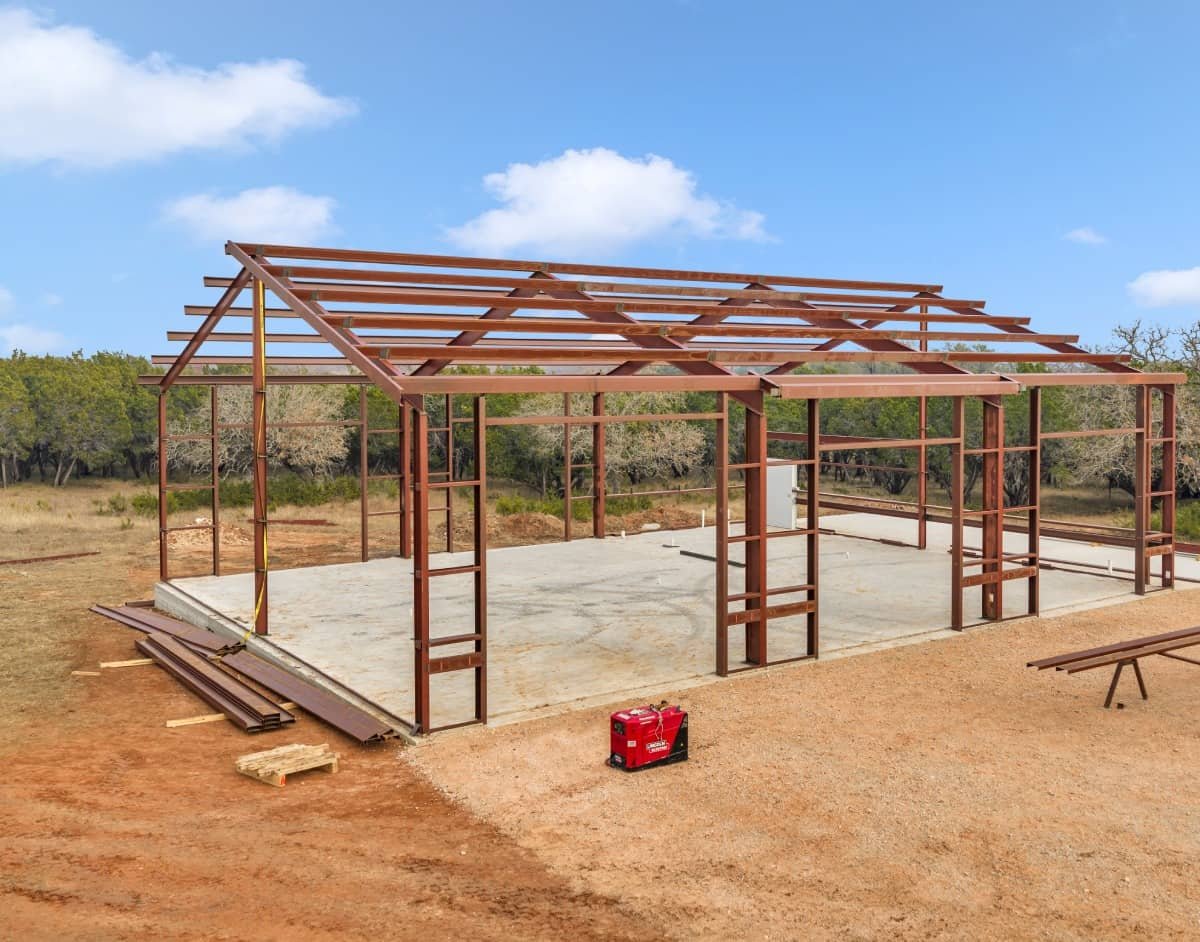
The slab is poured and cured while steel ships. The frame goes up in days for a mid-size building, panels and doors follow, and then the inspections. Our rigid frame erection page describes how that goes, and our structural steel erection page covers heavier framing. Owners who understand the order can plan which steps overlap. Permit review and steel production, for example, can run together once drawings are approved, but site work must finish before the frame arrives.
Inspections come at set points: footing and rebar before the pour, the frame after erection, and a final walk before occupancy. We schedule them with the building department and the trade partners so no crew waits idle for a signature. Missing an inspection window is a common cause of lost days.
Keeping erection safe on tight and open sites
Steel erection is overhead work with heavy lifts. Our trade partners follow fall protection and crane safety rules, and we check lift plans and ground bearing before a crane sets up. Overhead power lines are the most common hazard on small lots, and we ask where they run before we schedule the frame.
The Charles W. Anderson Loop passes along the eastern edge of Converse and separates the city from Randolph Air Force Base. Sites near the base or loop may face height, lighting and access questions, so we check with the owner and the local building department. Laydown space for trucks and storage of materials is planned in advance, because a crowded site is a dangerous site.
Heat is part of safety in this area. Erection teams start early in summer, take water breaks and avoid lifting panels in strong wind, since a large sheet acts like a sail. We keep first aid and fire extinguishers on site and walk the job daily to catch loose materials, open edges and tripping hazards before they hurt someone.
Shops, storage and farm buildings in steel
Converse owners ask for contractor shops, equipment storage, small warehouses, church halls and storage rows. Our pre-engineered metal building page shows the standard forms, and each type has a typical schedule: simple storage buildings go up faster than conditioned shops with offices.
Edge-of-town parcels also draw agricultural buyers. Hay barns, horse barns and implement sheds are quick builds, since they are mostly open or lightly finished. Our agricultural buildings page explains how we price them, and the agriculture industry page shows the rest of that market.
Pricing follows the schedule. A building that must be ready by a fixed date may cost more, because it can call for expedited steel, overtime or extra equipment. A building with a flexible date costs less, since it can take the fabricator's normal slot and the trade partners' regular rates. Tell us which one you have, and we will quote accordingly.
How we protect your schedule
We order steel only after drawings are approved, because changing a frame after release costs money and time. We track the fabricator's milestones and report them to you. When a date slips, we say so and show the effect downstream.
We also schedule trade partners to meet the steel and not the other way around. A slab that is ready two weeks before the frame arrives costs nothing, while a frame that arrives before the slab is cured costs storage and crane standby. Weather can move a pour, so we hold backup dates. Compare approaches in nearby markets on our San Antonio page and New Braunfels page.
Communication matters as much as the calendar. You receive a short status note at each milestone: drawings approved, steel released, steel shipped, slab poured, frame up, building closed in. If you ever want to know where your job stands, you should not have to ask.
Annexation, growth and what it means for your lot
Converse put forward a plan in 2017 to bring 12 square miles beside Randolph Air Force Base into the town in stages through 2033, roughly tripling its footprint. If your land sits in an area that may be annexed, ask the city what rules would apply, including permits, setbacks and fire access. Rules often change when a property moves from county to city control.
We build to the standard your site requires and ask questions early. Utilities, driveway permits and drainage can take as long as the steel. For a comparison with a county seat on the corridor, see our Seguin page. If you need a building by a hard date, tell us first and we will say whether the steel schedule supports it.
Drainage deserves a line of its own. A Converse lot that sheds water toward a neighbor draws complaints, and the city may ask for a drainage plan. We grade the pad to match the original flow and keep finished floor above the nearest swale, which reduces review comments and protects the building after a storm.
Get a written schedule for your Converse building
Send us the building size, use and site. We will return a price, a steel lead time in writing and an outline of permit and erection steps, with dates you can plan around.
Common Questions
How long is steel lead time right now?
It changes with the market, so we quote it in writing when you order and update it if the fabricator moves. Ask for the date range, not a promise of a single day. We also tell you what drives the range.
Can the slab be poured before the steel arrives?
Yes, and it is the usual order. The anchor bolts must be set to the drawings, and the concrete must cure before the frame goes up. We time the pour so the two meet.
What delays a build the most?
Permit review, late design changes and late utility connections cause most delays. Changing the size or door layout after steel is released is the most costly. We lock the design first.
Can you phase a building?
Yes. We can build the shell first and finish the office or mezzanine later, or frame an end wall for a future bay. That lets you open sooner and spend as revenue arrives.
What if I have a hard opening date?
Tell us at the start. We work back from your date and show whether permits, steel and erection fit. If not, we suggest options such as a smaller first phase.